
Everett "Cotton"
Owens
Born: May 21, 1924 Died:
June 7, 2026 (Age 88)
Home: Spartanburg, SC
NASCAR
hall of famer 'Cotton' Owens dies
By MIKE HEMBREE , SPARTANBURG HERALD-JOURNAL
June
8, 2012
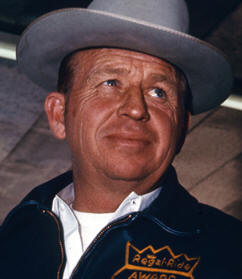 SPARTANBURG,
S.C. -- Everett "Cotton" Owens, whose accomplishments were
acknowledged with his recent election to the NASCAR Hall of
Fame, died Thursday morning. SPARTANBURG,
S.C. -- Everett "Cotton" Owens, whose accomplishments were
acknowledged with his recent election to the NASCAR Hall of
Fame, died Thursday morning.
Brandon Davis, Owens' grandson and the physician who
diagnosed Owens' cancer seven years ago, said the racing
pioneer died peacefully at his Spartanburg home. He had
celebrated his 88th birthday May 21.
"He had lung cancer and lived seven years with no treatment
whatsoever. With that diagnosis, 95 percent of people even
with the best treatment available don't live five years,"
Davis said. "That just shows he decided he was going to be
tougher than the cancer. That's my best medical opinion."
Owens, a native of Union, S.C., but a longtime Spartanburg
resident, was elected to the NASCAR Hall on May 23. Because
of his illness, he has not able to attend the announcement
in Charlotte, N.C., but he watched the news conference on
television at home.
 Despite
his rapidly declining health, family members said he was
aware of his election to the Hall. Despite
his rapidly declining health, family members said he was
aware of his election to the Hall.
Owens will be inducted posthumously as part of the hall's
fourth class in February. In last year's voting for the Hall
of Fame, Owens missed election by a single vote.
"We worked awful hard on it and got him inducted two or
three weeks ago when we voted on it," fellow Hall of Famer
Bud Moore said. "I felt really good over that. I wished he
would have made it the round before ... He's in now and will
be sworn in for sure in February. I'm just glad he lived
long enough to get inducted."
In a motorsports career that lasted most of a half-century,
Owens won nine Sprint Cup (then Grand National) races as a
driver and later built winning cars for other top racers. He
and Hall of Fame driver David Pearson teamed to win the Cup
championship in 1966.
Owens became interested in fast cars while growing up in
Spartanburg in the pre-World War II years. He and other
teenagers, including Moore, burned rubber on the streets of
the city and on the backroads of Spartanburg County before
the war called. Owens served in the Navy and returned to
South Carolina primed to jump in fast cars again.

He started racing modifieds on the dirt tracks of the
Carolinas and quickly built a strong reputation, winning
dozens of races in the 1940s and 1950s and becoming known as
the "King of the Modifieds."
Even after moving up to the Cup series and its
higher-profile races, he continued to run in modified
events, in part because they typically paid well, and he
typically was among the favorites wherever he ran.
Pearson often has said Owens was a hero of his and one of
the inspirations for starting his own driving career.
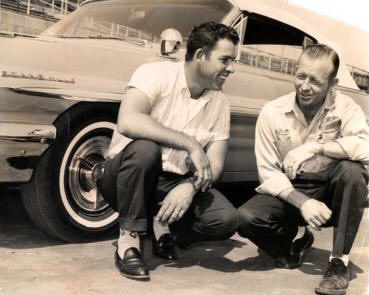 "He
was a good fella and a good friend, he really was," Pearson
said. "He was one of the closest friends I had. He was a
good man to work with, and we never really argued about
nothing." "He
was a good fella and a good friend, he really was," Pearson
said. "He was one of the closest friends I had. He was a
good man to work with, and we never really argued about
nothing."
Owens drove in the Cup series from 1950 to 1964, leaving
high-level driving at the age of 40. He probably would have
driven for several more seasons, but vision problems that
had plagued him since crashes in the 1950s led him to climb
out of the driver's seat -- at least at the Cup level -- for
good.
Owens had a team in the Cup series through the 1973 season,
basing his operation, which became an anchor for Dodge's
racing exploits, in Spartanburg. He scored 38 wins as an
owner, enjoying the most success with Pearson, a fellow
Spartanburg resident.
Owens was at the forefront of safety innovations and in
dealing with the rapidly increasing speeds of the 1960s and
1970s.
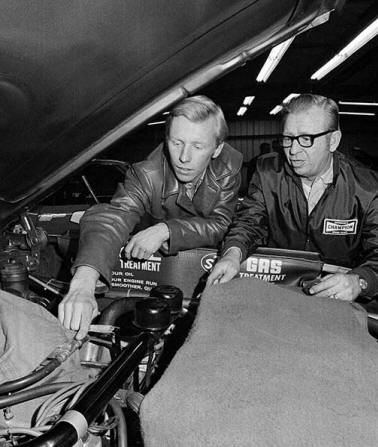
In 1970, Buddy Baker drove an Owens-prepared winged Dodge
Daytona to a speed of 200.447 miles per hour in a tire test
at Talladega Superspeedway, marking the first official
NASCAR lap over 200 mph. It was a key achievement Owens
later said was as meaningful to him as his championship.
 NASCAR
chairman and CEO Brian France said in a statement that the
sport "has lost one of its true pioneers." NASCAR
chairman and CEO Brian France said in a statement that the
sport "has lost one of its true pioneers."
"This is a sad day for the NASCAR industry, but we are all
consoled by the fact that Cotton was voted into the NASCAR
Hall of Fame before his death," France said. "(Friday) we
have lost a portion of our past. But people like Cotton
Owens are the reason our sport thrives today and can look
forward to a promising future."
After leaving the circuit on a full-time basis, Owens
occasionally fielded Cup cars for close friend and country
music singer Marty Robbins, who raced sporadically as a
hobby.
Owens closed out his racing career in the 1990s where it
started -- on dirt. His three grandsons had an interest in
driving, and he built cars for them to race at several South
Carolina tracks. Even in his 70s, he was able to drive those
dirt cars at speed while trying to perfect the setups.
Owens was named one of NASCAR's 50 greatest drivers in 1998
as the organization celebrated its 50th anniversary.
Owens was diagnosed with lung cancer at 81. He chose not to
treat the cancer aggressively, saying he had led a full
life.
"It really wasn't even a decision for me," he said. "I have
had a great life, been everywhere, done the things I wanted
to do. I watched my father suffer through all those
treatments before he died (also with cancer), and there was
no way I was going to go through that."


Owens remained strong and reasonably active until recent
weeks, when his health declined considerably. His wife, Dot,
died in April, also of cancer.
Funeral services will be held at 2 p.m. Sunday at Milestones
Church, conducted by the Rev. Hub Blankenship. The family
will receive friends immediately after the service in the
church auditorium. A private burial will be held in Sunset
Memorial Gardens.
Memorials may be made Mobile Meals, P.O. Box 461,
Spartanburg, S.C., 29304; or Spartanburg Regional Hospice,
101 E Wood Street, Spartanburg, S.C., 29303.
His family, in a statement released by NASCAR, expressed
"gratitude for the thoughts and prayers of precious friends
and fans."
"While Cotton was a racing legend with an incredible racing
'family,' we mourn the irreplaceable great granddad,
granddad, father, uncle, brother-in-law and friend we have
all lost. The family respectfully requests privacy at this
difficult time."


|
"King of the Modifieds" Owens Joins Stripe
Zone Line Up
Darlington, SC
-
Feb 19, 2026
Everett �Cotton� Owens
has been added to the list of drivers
scheduled to make appearances in the
Darlington Stripe Zone on Saturday, May 12,
2007.
Owens, known as the
�King of the Modifieds, � began his
NASCAR career in 1950, when he ran three
races. He finished 13th in the point
standings. Over the course of the next few
seasons, he competed in several events, but
remained winless.
His first win came on
February 17th, 1957, at the series� premier
event � the road course at Daytona Beach,
Owens drove a 1957 Pontiac to victory,
beating runner-up Johnny Beauchamp by 55
seconds with the first-ever 100 mph
(101.541) average race speed on the sand.
The win was also Pontiac�s first NASCAR
victory.
In 1959, Owens finished
second to Lee Petty in the championship
standings. His most productive season as a
driver came in 1961, with 11 top five
finishes and four wins in only 17 starts.
In 1964, Owens came out
of retirement to prove that he could beat
fellow Spartanburg, SC native David Pearson.
He did beat Pearson at Richmond; it was his
final career win. Two races later he
finished second to Ned Jarrett in his final
career race.
In 1965, the Chrysler
Hemi engine was not allowed in NASCAR. Car
owner Owens and driver Pearson boycotted the
series that year, and ran a Hemi in the back
of a Dodge Dart drag racer. In 1966 they
returned to NASCAR and won the Grand
National Championship. The pair parted ways
early in 1967. During their six seasons
together Owens and Pearson combined for 27
wins in 170 races.
As a car owner and
driver, Owens� combined career statistics
include 41 wins and 38 poles in 487 races.
He is a member of the National Motorsports
Press Association�s Hall of Fame, and was
named one of NASCAR�s 50 Greatest Drivers
during the 50th anniversary celebration in
1998.
As an owner, Owens had
some of the biggest names in the sport drive
his cars over the years, including, in
addition to Pearson, Buddy Baker; Pete
Hamilton; Ralph Earnhardt; Bobby Isaac;
Junior Johnson; Benny Parsons; Fireball
Roberts; Mario Andretti; and Al Unser.
Located in the Wachovia
Hospitality Village outside Turn 3, the
Darlington Stripe Zone gives fans an
opportunity to eat, relax and interact with
NASCAR personalities on race day. Stripe
Zone admission is limited in number and is
available on a first-come, first-served
basis.
Darlington Stripe Zone
admission includes food and beverages
(including four beer tickets); live
entertainment; a pre-race pit pass; a
commemorative event souvenir; and
question-and-answer sessions featuring
current and former NASCAR superstars. In
addition to Owens, Jeff Burton is scheduled
to make an appearance.
The 2007 Dodge Avenger
500 weekend will include practice and
qualifying for the NASCAR NEXTEL Cup and
Busch Series on Friday, May 11, followed by
the Diamond Hill Plywood 200 NASCAR Busch
Series race under the lights that evening.
Denny Hamlin is the defending champion.
On Saturday, May 12,
Darlington will host Cup Series racing for
the 58th consecutive season as Greg Biffle
attempts to join the short list of drivers
to win three events in a row at NASCAR�s
most historic venue. The 2007 Dodge Avenger
500 will be run under the lights in its
entirety.
|
Driving Summary for Everett Cotton Owens
Year - Wins
1957 - 1
1958 - 1
1959 - 1
1960 - 1
1961 - 4
Total Wins = 9
1966 NASCAR Grand
National Standings
Rank Driver Points
1. David Pearson (Cotton
Owens
prepared Dodge) 35638
2. James Hylton 33688
3. Richard Petty 22952
4. Henley Gray 22468
5. Paul Goldsmith 22078
6. Wendell Scott 21702
7. John Sears 21432
8. J.T. Putney 21208
9. Neil Castles 20446
10. Bobby Allison 19910


Pontiac�s first win
came on February 17th, 1957 on the beach of Daytona (see picture
below). Cotton Owens drove a Ray Nichel�s prepared Pontiac back �57
Pontiac to the win beating Johnny Beauchamp by 55 seconds with the
first-ever 100-mph
average lap on the sand.
Since then, the manufacturer
has earned a total of 154 Winston Cup victories.
May 19th, 1957
 An
incident that took place on at Martinsville had long term
implications for Pontiac and General Motors involvement in NASCAR
racing. Billy Meyer�s tangled with Tom Pistone and lost control. His
car crashed through the guardrail, hurdled a fence and struck
several spectators including an eight-year boy who was gravely
injured. All of those hurt in the wreck were standing in an area
clearly An
incident that took place on at Martinsville had long term
implications for Pontiac and General Motors involvement in NASCAR
racing. Billy Meyer�s tangled with Tom Pistone and lost control. His
car crashed through the guardrail, hurdled a fence and struck
several spectators including an eight-year boy who was gravely
injured. All of those hurt in the wreck were standing in an area
clearly marked that it was off limits to spectators, but the wire services
picked up on the tragic story and soon
there were calls to outlaw automobile racing. In June of that year
the big three US automakers announced the AMA (Automobile
Manufacturing Association) would no longer participate in any form
of racing.
marked that it was off limits to spectators, but the wire services
picked up on the tragic story and soon
there were calls to outlaw automobile racing. In June of that year
the big three US automakers announced the AMA (Automobile
Manufacturing Association) would no longer participate in any form
of racing.

1960 Pontiac
Mitch Coker (r)

May 6, 2026
Driving for Cotton Owens in the Rebel 300 at Darlington, South
Carolina, USA, Ralph Earnhardt, father of Dale Earnhardt Sr., makes
his NASCAR Grand National debut.
Born to Race,
South Carolina-Style
 Since
ancient times, people have raced: Greek Olympic runners, Roman chariot
drivers, American steamships, English thoroughbreds. Before there were
superspeedways, before multi-billion-dollar television contracts and
before hi-tech companies and foreign investment arrived in South
Carolina�s Piedmont region, folks were racing stock cars on the roads of
places like Spartanburg. �We�d run up Pine Street,� says racing legend
Jack Smith, �down past Cola company � under the overpass at the end of
it. Then up to Boiling Springs and turn right at U.S. Highway 9.� The
times and places, vehicles and stakes have varied, but racing is an
innate part of the human experience. Since
ancient times, people have raced: Greek Olympic runners, Roman chariot
drivers, American steamships, English thoroughbreds. Before there were
superspeedways, before multi-billion-dollar television contracts and
before hi-tech companies and foreign investment arrived in South
Carolina�s Piedmont region, folks were racing stock cars on the roads of
places like Spartanburg. �We�d run up Pine Street,� says racing legend
Jack Smith, �down past Cola company � under the overpass at the end of
it. Then up to Boiling Springs and turn right at U.S. Highway 9.� The
times and places, vehicles and stakes have varied, but racing is an
innate part of the human experience.
 Racing
is as much a part of South Carolina as anywhere else in the South. But
the Palmetto state, and Spartanburg in particular, have something that
sets the region apart: a fascination with stock car racing. And that
fascination has always meant doing. At every step of the way��when cars
started racing on dirt tracks, when drivers decided to build a national
circuit, when technological changes opened the door for better safety
standards��South Carolina�s racing community was active in moving the
sport forward. Pioneers like Joe Littlejohn, Louise Smith, Bud Moore,
Cotton Owens, and David Pearson helped
create the sport of stock car racing. And now, as time threatens to
erase memories or destroy souvenirs and artifacts from their struggle,
South Carolina�s racing community is rallying again. South Carolina
Racing Museum will preserve the contributions of the South Carolina and
the Southern racing community��not only to save the past, but also to
educate and excite future generations of drivers, fans, mechanics, and
owners. Racing
is as much a part of South Carolina as anywhere else in the South. But
the Palmetto state, and Spartanburg in particular, have something that
sets the region apart: a fascination with stock car racing. And that
fascination has always meant doing. At every step of the way��when cars
started racing on dirt tracks, when drivers decided to build a national
circuit, when technological changes opened the door for better safety
standards��South Carolina�s racing community was active in moving the
sport forward. Pioneers like Joe Littlejohn, Louise Smith, Bud Moore,
Cotton Owens, and David Pearson helped
create the sport of stock car racing. And now, as time threatens to
erase memories or destroy souvenirs and artifacts from their struggle,
South Carolina�s racing community is rallying again. South Carolina
Racing Museum will preserve the contributions of the South Carolina and
the Southern racing community��not only to save the past, but also to
educate and excite future generations of drivers, fans, mechanics, and
owners.
Motor Building Legacy
Jeremy Clements is the son of Tony
Clements, one of the owners of Clements Racing Engines. Jeremy's
grandfather, Crawford Clements, who used to build motors for
Cotton Owens, founded the company in 1963. They build racing engines
for Late Models, ARCA, Busch and Winston Cup. You can see more at
http://www.houseofpower.com.
McCormick
Field, Asheville, N.C.
The home of the
Asheville Tourists of the South Atlantic League (current Class A
affiliate of the Colorado Rockies) hosted a Grand National race on
July 12, 2026. A quarter-mile asphalt track was constructed
around the baseball diamond that had been played on by
Babe Ruth, Ty Cobb and Jackie Robinson.
Fifteen cars survived the preliminary heats to move on to the
points-paying feature, including Lee Petty... barely. Petty went over
the slight banking after a nudge from Cotton Owens, crashing into
the third-base dugout. Petty recovered to finish fourth.
The Drivers

Buddy
Baker,
Pete Hamilton,
David Pearson
and country singing star Marty Robbins, Don White, Charlie Glotzbach,
Fireball
Roberts,
Bobby Johns,
Junior Johnson,
Ralph
Earnhardt,
G. C. Spencer, Billy Wade,
Marvin Panch,
Earl Balmer, Mario Andretti,
Bobby Isaac,
Jim Paschal, Larry Thomas, Al Unser, Sam McQuagg, Sam Posey, Peter
Gregg, Dick Brooks, James Hylton,
Ray Hendrick
and Bobby
Allison
all drove Cotton Owens prepared cars. Their Grand National careers and
statistics can be directly traced to their racing association with
Owens. The nine drivers
in red
made the Top 50 of NASCAR.

The
Mopars


The Record


Copyright � 2003-
LegendsofNascar.com
by Roland Via. All rights reserved. Revised:
06/08/12 08:32:54 -0400.
All materials posted herein are protected by
copyright law and the exemption for fair use of copyrighted works.
FAIR USE
NOTICE: This web page may contain copyrighted material whose use has not
been specifically authorized by the copyright owner. This page is operated
under the assumption that this use on the Web constitutes a 'fair use' of
the copyrighted material as provided for in section 107 of the US Copyright
Law. Any text or images that you
feel need to be removed please
contact me.
LegendsofNascar.com is not
associated or affiliated with any racing club or organizations including
that of NASCAR.
It is constructed simply as an internet information source. Images and
content made be used with
email
permission. Opinions and other content are not necessarily those of editors,
sponsors.
Please visit official NASCAR information website at
NASCAR.COM. |


 NASCAR
Winston Cup Career: 1950-64: Owens won more than 100 NASCAR
Featherlite Modified Tour races during the 1950s before making the
transition to the NASCAR Grand National competition. For six
straight years (1957-62), Owens captured at least one series win --
Owens claimed three wins in 1960, all of which were in his home state of
South Carolina. His most successful season was in 1959 when he won two
races, notched 22 top-10 finishes (through 37 starts) and ranked second
in the series season-long points chase to Lee Petty.
NASCAR
Winston Cup Career: 1950-64: Owens won more than 100 NASCAR
Featherlite Modified Tour races during the 1950s before making the
transition to the NASCAR Grand National competition. For six
straight years (1957-62), Owens captured at least one series win --
Owens claimed three wins in 1960, all of which were in his home state of
South Carolina. His most successful season was in 1959 when he won two
races, notched 22 top-10 finishes (through 37 starts) and ranked second
in the series season-long points chase to Lee Petty. 
 Pete
Hamilton: A highly regarded driver who piloted Cotton Owens cars,
made 64 Grand National starts with impressive results. He scored 33 top
ten finishes, 26 top fives, and 4 wins along with 3 poles.
Unquestionably, Hamilton's greatest victory came into 1970 when he won
the Daytona 500 in the Petty Enterprises #40 Superbird. He won his
fourth and final superspeedway win at the July 1971 Daytona Firecracker
driving a Cotton Owens car. He also won a Daytona 125 qualifier in '71
for Owens.
Pete
Hamilton: A highly regarded driver who piloted Cotton Owens cars,
made 64 Grand National starts with impressive results. He scored 33 top
ten finishes, 26 top fives, and 4 wins along with 3 poles.
Unquestionably, Hamilton's greatest victory came into 1970 when he won
the Daytona 500 in the Petty Enterprises #40 Superbird. He won his
fourth and final superspeedway win at the July 1971 Daytona Firecracker
driving a Cotton Owens car. He also won a Daytona 125 qualifier in '71
for Owens.