| |


|
|

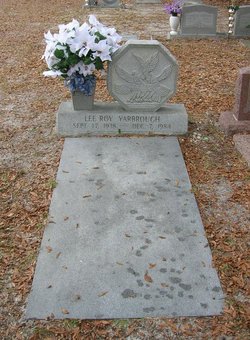
Lonnie LeeRoy Yarbrough
Sept. 17, 1938 - Dec. 7, 1984
 LeeRoy
Yarbrough drove for the
legendary car owner Junior Johnson
and had quite a productive career as a driver
as one of the best
super speedway drivers in NASCAR history. He joined Johnson's race team in
1967, and it was a perfect match. "Lee Roy had the most raw talent I've ever
seen." said Junior. In 1969, he won the Daytona 500, the World 600, and the
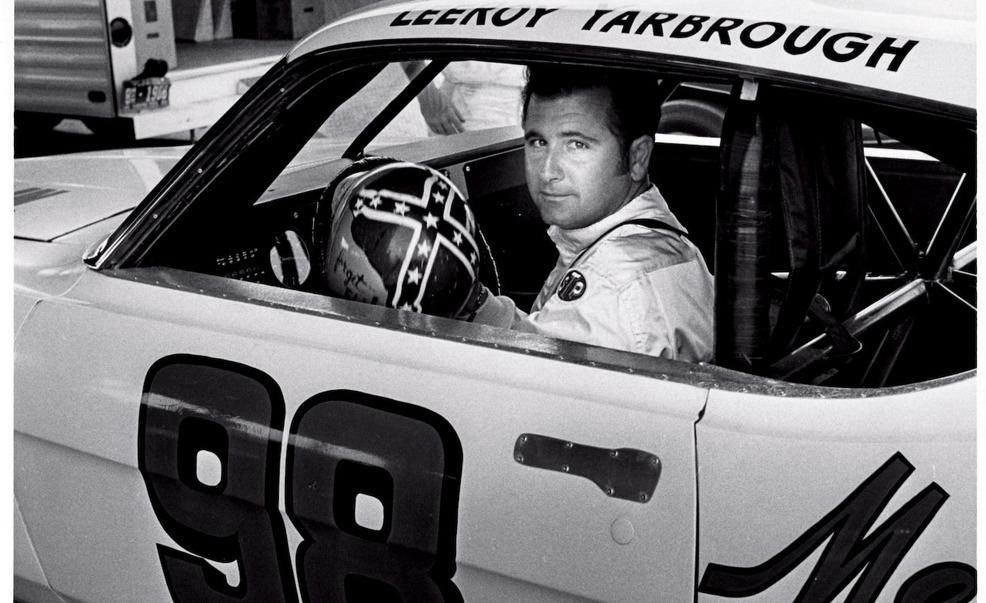
Southern 500, the equivalent of the Winston Million. LeeRoy drove the
#98 Mercury Cyclone II to victory in the 1969 Daytona 500 and went on to set
a record for consecutive super speedway wins in a single season. His Mercury
was definitely a threat to win every time it entered a race. Unfortunately,
injuries he received in a crash shortened his career. Sadly, in 1984 he died
at the age of 46 in an institution while battling alcoholism. LeeRoy
Yarbrough drove for the
legendary car owner Junior Johnson
and had quite a productive career as a driver
as one of the best
super speedway drivers in NASCAR history. He joined Johnson's race team in
1967, and it was a perfect match. "Lee Roy had the most raw talent I've ever
seen." said Junior. In 1969, he won the Daytona 500, the World 600, and the
Southern 500, the equivalent of the Winston Million. LeeRoy drove the
#98 Mercury Cyclone II to victory in the 1969 Daytona 500 and went on to set
a record for consecutive super speedway wins in a single season. His Mercury
was definitely a threat to win every time it entered a race. Unfortunately,
injuries he received in a crash shortened his career. Sadly, in 1984 he died
at the age of 46 in an institution while battling alcoholism.
Buried
at Peoria Cemetery, located in Orange Park,
Clay County, FL.

Something Just Wasn�t Right
After a vicious stock-car crash in 1970, Lee Roy Yarbrough�s
story spun downward into one of the
saddest tales ever told.
�
Oct 2008
By STEVEN COLE SMITH
 On
a Thursday evening in February 1980,
Minnie Yarbrough and her son, Lee Roy,
were watching television in the little
house on Plymouth Road in Jacksonville,
Florida, when Lee Roy said, �Mother, I
hate to do this to you.� On
a Thursday evening in February 1980,
Minnie Yarbrough and her son, Lee Roy,
were watching television in the little
house on Plymouth Road in Jacksonville,
Florida, when Lee Roy said, �Mother, I
hate to do this to you.�
�What do you mean?�
Minnie said to her son. And Lee Roy
showed her what he meant. He reached
around her neck, and with both hands, he
began to strangle her. A nephew heard
his aunt�s screams, rushed into the
room, and tried to pull Lee Roy away but
couldn�t. So he grabbed a full jelly jar
from the kitchen and clocked Lee Roy
over the head. Even so, Lee Roy had
enough left in him to fight the first
police officer who arrived a few minutes
later.
That night, Lee Roy
Yarbrough, at 41, became the first and
thus far only Daytona 500 winner to be
charged with first-degree attempted
murder for trying to kill his
65-year-old mother, plus assault on a
police officer, both felonies.
Many thought it was the
beginning of the end for the only racer
to be unanimously voted Driver of the
Year, bracketed between Mark Donohue and
Al Unser. But Lee Roy Yarbrough had been
slipping into a dark place for nearly a
decade, though few outside NASCAR knew
it.
In February, Daytona
International Speedway held a big
celebration for the 50th anniversary of
the Daytona 500, with all 24 living
winners of the race showing up. Very
little was said about Lee Roy Yarbrough,
who had positively dominated the track,
and the sport, in 1969. Next February,
when the anniversary of his win
arrives�not only at the Daytona 500 but
in the Sportsman race there the day
before and later that July in the
Firecracker 400�fans who remember
Yarbrough shouldn�t expect much of a
formal mention of him then, either.
No one at NASCAR likes
sad stories, and they don�t come much
sadder than this one.
But when he was on top,
no driver was considered more fearless
or more focused. �Lee Roy had just one
speed�wide open,� says Richard Petty.
�He didn�t figure nothin�, didn�t plan
nothin�, just ran flat-out lap after
lap. And if he could get by with it, he
was up front. If he didn�t, he was in
the pits. He put everything into that
one strategy�full speed ahead.�
Broad-shouldered and handsome,
slicked-back hair, a dimpled chin, big
sideburns, and improbably white teeth,
Lee Roy was loved by the camera. No one
looked better in the victory photos with
the inevitable blond trophy girl beside
him. Self-confident to the point of
being cocky, Lee Roy was guarded and
professional with the media, but outside
the spotlight, he was a hard-partying
friend to those he liked, including his
crew. One recalls that following a
NASCAR win in South Carolina, �Lee Roy
bought a Lincoln Town Car�one of those
huge ones, like the funeral homes have.�
He piled his crew into the Lincoln, and
they visited every whorehouse in town.
�It�s all on me, fellas,� Yarbrough
said.

And he was good enough
for other series to request his
presence. He drove a Ford G7A in the
first Can-Am race at Road Atlanta,
competing against sports-car superstars
Denny Hulme, Bob Bondurant, and Vic
Elford. He raced in the Trans-Am Series,
with drivers Mark Donohue, Peter Revson,
and Parnelli Jones.
Yarbrough was an unlikely
presence in the pits for sports-car
races. Judy Stropus, the lead scorer for
Bud Moore�s Mercury Cougar Trans-Am team
that Yarbrough drove for, suspects he
�thought of us as prim, proper, and
prissy. And I suspect we may have
considered him a country bumpkin. But he
certainly could drive.�
Three times he raced in
the Indianapolis 500, and he was going
for a fourth when during practice he
crashed one of Dan Gurney�s Eagles,
damaging the car too severely to
continue. Gurney raced against Yarbrough
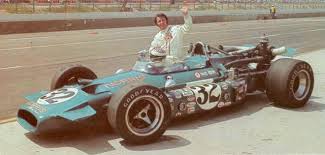 several
times in Indy cars and stock cars before
hiring him to drive in the 1971
Indianapolis 500. several
times in Indy cars and stock cars before
hiring him to drive in the 1971
Indianapolis 500.
�Lee Roy came to race,�
Gurney says. �Back then�and I a bunch of
race-car drivers in the same room, they
try hard to establish a sort of unspoken
pecking order. It was meant to
intimidate. You wanted to give the
impression that if you and I were going
into the same corner side by side, that
you should probably be the one to back
off. �And Lee Roy was very good at that.
Very good.�
Lonnie Lee Roy Yarbrough
was born in Jacksonville on September
17, 1938. One of six children, he grew
up in the part of town called Westside,
a blue-collar neighborhood where, on
Saturday night, the sound of the local
dirt track just up the road beckoned.
Even before he was old enough to drive,
Lee Roy began working on a 1934 Ford,
dropping a Chrysler engine into it, and
was soon terrorizing the local police on
public roads. Finally, at 19, he entered
a race at Jacksonville Speedway Park and
won it. From then on, there was no doubt
what Lee Roy, who had dropped out of
public school years before, would do
with the rest of his life.
Cars were a passion. When he wasn�t
hanging around Tommy Moon�s
neighborhood garage, he was working on
his cars in the front yard, where
helpers included neighborhood kids who
watched through the fence as he raced at
the Jacksonville track. One of those
neighbor kids intended to follow Lee
Roy�s footsteps into auto racing and
would tell his friends that he would
someday be as famous as Yarbrough. He
was correct, but it was to be in a
different field: Ronnie Van Zant
was the founder and lead singer for the
band Lynyrd Skynyrd. He was just 29 when
he and two members of the band died in a
plane crash in 1977.
�There was always racing around the
house,� recalls Yarbrough�s younger
sister, Evelyn Motel. Once Lee Roy began
working his way up the racing ladder,
drivers such as Richard Petty and Ned
Jarrett would stop by the house for
Minnie Yarbrough�s chicken dinners when
they were in town racing.
Yarbrough broke into NASCAR in the
modified class, winning 83 races in
three years before finally getting his
first Grand National start�that�s what
the Sprint Cup series is now�in Atlanta
in October of 1960, when he was 22. He
qualified 18th, but after blowing a tire
and crashing, he finished 33rd, one spot
ahead of Glenn �Fireball� Roberts. It
wasn�t until 1964 that he began to get
some competitive rides, winning his
first race at Savannah, Georgia�only 11
other cars showed up�and another on a
dirt track in Greenville, South
Carolina. He managed to enter 34 races
in 1964, but NASCAR ran 62 Grand
National races that year, so even a
couple of wins at smaller dirt tracks
still did not raise Lee Roy�s stock. But
he nonetheless finished 15th in the
points, one spot behind Junior Johnson;
several years later those two would pair
for the best season in either man�s
career.
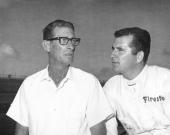 In
fact, Johnson helped get Yarbrough one
of his earliest competitive rides,
driving for
Ray Fox,
who built Johnson�s Daytona 500-winning
Chevrolet in 1960. �We went up to
Hickory Spee (Left)dway in North
Carolina,� says Olin Hopes, later a
crewman for Fox on Yarbrough�s car, �and
we took a car for Junior and one for
Ray,� who was still driving then. Lee
Roy was there, and he put on a show.
�Afterwards, Junior came up to Ray and
said, �Hire that boy. He�s a driver.� � In
fact, Johnson helped get Yarbrough one
of his earliest competitive rides,
driving for
Ray Fox,
who built Johnson�s Daytona 500-winning
Chevrolet in 1960. �We went up to
Hickory Spee (Left)dway in North
Carolina,� says Olin Hopes, later a
crewman for Fox on Yarbrough�s car, �and
we took a car for Junior and one for
Ray,� who was still driving then. Lee
Roy was there, and he put on a show.
�Afterwards, Junior came up to Ray and
said, �Hire that boy. He�s a driver.� �
 Fox
and Yarbrough had moderate success,
but the pair is, perhaps, best known
for a publicity stunt that took
place in February 1965 at Daytona
International Speedway. Dodge, in
one of many manufacturer disputes
with NASCAR, had pulled out of
racing but supplied Fox with a 1965
Coronet and told him and Lee Roy to
take it to Daytona and set a
closed-course speed record. Fox
supercharged the Hemi V-8 and added
fuel injection and a bag of
drag-racing tricks, including a big
air scoop and a hunkered-down body.
With close to 1000 horsepower, Lee
Roy spun the rear tires practically
all the way around the dusty track,
then went on to reportedly clock 240
mph on a straightaway. They settled
for an official speed of 181.81 mph,
a record. They could have gone
faster, but Lee Roy heard a sound he
didn�t like from the front end of
the car�a click-click-click�and
he pitted. It was a big bolt
imbedded in the tread of the
right-front Firestone: The
front-page photo of the Daytona
Beach Evening News the
next day showed the dimpled, smiling
Lee Roy, pointing at the bolt still
lodged in the tire. Fox
and Yarbrough had moderate success,
but the pair is, perhaps, best known
for a publicity stunt that took
place in February 1965 at Daytona
International Speedway. Dodge, in
one of many manufacturer disputes
with NASCAR, had pulled out of
racing but supplied Fox with a 1965
Coronet and told him and Lee Roy to
take it to Daytona and set a
closed-course speed record. Fox
supercharged the Hemi V-8 and added
fuel injection and a bag of
drag-racing tricks, including a big
air scoop and a hunkered-down body.
With close to 1000 horsepower, Lee
Roy spun the rear tires practically
all the way around the dusty track,
then went on to reportedly clock 240
mph on a straightaway. They settled
for an official speed of 181.81 mph,
a record. They could have gone
faster, but Lee Roy heard a sound he
didn�t like from the front end of
the car�a click-click-click�and
he pitted. It was a big bolt
imbedded in the tread of the
right-front Firestone: The
front-page photo of the Daytona
Beach Evening News the
next day showed the dimpled, smiling
Lee Roy, pointing at the bolt still
lodged in the tire.
Lee Roy began to get offers to drive
better and better cars, and finally the
call came in late 1967: Car owner Junior
Johnson, by then retired from driving,
thought he could do better than his
current driver, Darel Dieringer, and
gave Yarbrough a shot. Things did not go
particularly well that year. The team
missed the important National 500 at
Charlotte when, during practice, the
onboard fire extinguisher went off,
blinding Lee Roy, who crashed the car,
totaling it. The 1968 season wasn�t much
better: They ran 26 of the 49 races that
season, with two victories, though Lee
Roy finished second at both Daytona
races.
Then came 1969, and everything clicked.
Lee Roy, then 30, had experience and
maturity, and more than a year to come
to an understanding with his equally
mercurial, opinionated crew chief, Herb
Nab. The team entered 30 of the 54
races, won seven, with 21 top-10
finishes. Lee Roy was the first driver
to win NASCAR�s �Triple Crown��the
Daytona 500, the Firecracker 400, and
the Southern 500 at Darlington. In 1985,
Bill Elliott won that year�s version of
the Triple Crown and earned a record $1
million for it. Yarbrough�s total purse
for 1969: $193,211.
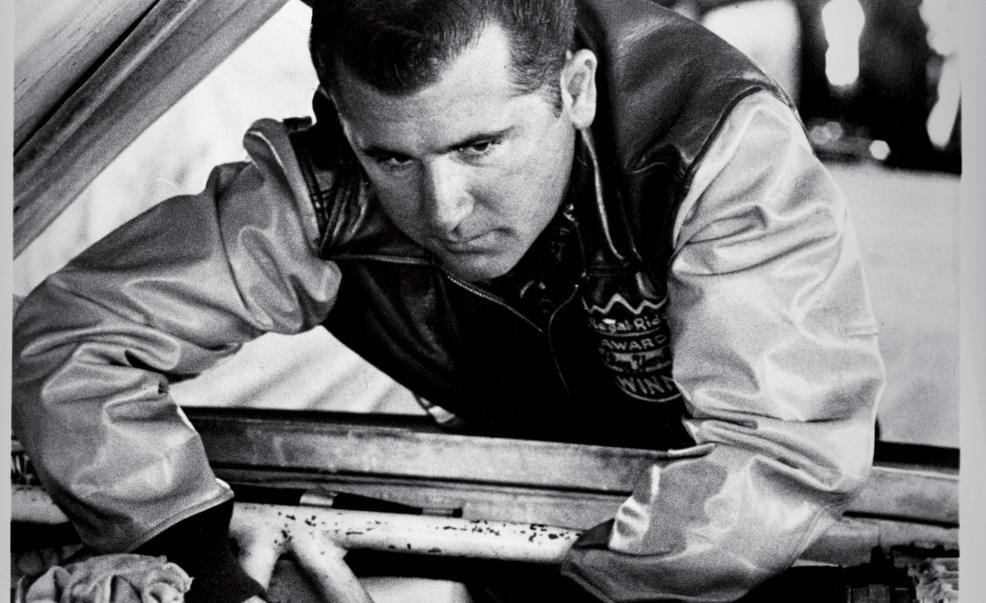 Then
in 1970, the wheels started to come off
the Johnson/Yarbrough juggernaut, in
part because sponsorship and factory
support was waning. Yarbrough ran just
19 races, with one lone win at
Charlotte, and only then because most of
the top cars had crashed. In 1971, Lee
Roy ran only six races, none after that
May practice crash at Indianapolis in
Dan Gurney�s Eagle. In 1972, Lee Roy
attempted a comeback, driving mostly for
journeyman privateer Bill Seifert, but
something was wrong. He entered 18 races
and managed five top-five finishes, but
four times Yarbrough needed a relief
driver to complete the race. He was
periodically late for races, or just
didn�t show up at all. At the Nashville
400 in Tennessee on August 27, he
qualified 13th, then on the pace lap
fell to the back, pulled into pit lane,
drove to the garage, and walked away. He
finished 28th of 28 cars, completed zero
laps, and the official reason for
retiring from the race: �Quit.� By then,
no one bothered to ask why�it was just
Lee Roy. A month later, Lee Roy
qualified 16th in Seifert�s Ford at the
Old Dominion 500 at Martinsville,
Virginia, and crashed on lap 108. It was
his last race. Four races remained in
the season, and Seifert used four
different drivers. Then
in 1970, the wheels started to come off
the Johnson/Yarbrough juggernaut, in
part because sponsorship and factory
support was waning. Yarbrough ran just
19 races, with one lone win at
Charlotte, and only then because most of
the top cars had crashed. In 1971, Lee
Roy ran only six races, none after that
May practice crash at Indianapolis in
Dan Gurney�s Eagle. In 1972, Lee Roy
attempted a comeback, driving mostly for
journeyman privateer Bill Seifert, but
something was wrong. He entered 18 races
and managed five top-five finishes, but
four times Yarbrough needed a relief
driver to complete the race. He was
periodically late for races, or just
didn�t show up at all. At the Nashville
400 in Tennessee on August 27, he
qualified 13th, then on the pace lap
fell to the back, pulled into pit lane,
drove to the garage, and walked away. He
finished 28th of 28 cars, completed zero
laps, and the official reason for
retiring from the race: �Quit.� By then,
no one bothered to ask why�it was just
Lee Roy. A month later, Lee Roy
qualified 16th in Seifert�s Ford at the
Old Dominion 500 at Martinsville,
Virginia, and crashed on lap 108. It was
his last race. Four races remained in
the season, and Seifert used four
different drivers.
Lee Roy showed up at Daytona for Speed
Week in 1973, a ghost. No one would take
a chance on him. It was, as far as
anyone knows, the last time Lee Roy
Yarbrough was at a NASCAR track. At 34,
his career was over.
Exactly what went wrong is a matter of
substantial speculation. Undeniably, his
problems started in April 1970, when he
crashed hard during a tire test at the
old Texas World Speedway. When close
friend and fellow driver Cale Yarborough
visited Lee Roy in the hospital, he
could tell something wasn�t right.
Several weeks later, Cale, a pilot like
Yarbrough�who was one of the first
NASCAR drivers to pilot his own
plane�offered to fly Lee Roy to the race
in Rockingham because he knew Yarbrough
had no business in any cockpit. While
Lee Roy looked fine, he was different:
distant, unresponsive, and on the
racetrack, less aggressive. The
following week, Lee Roy could not
remember flying home.
Those close to Lee Roy knew something
was wrong, but he denied it and
continued trying to find rides. Then
came the hard crash at Indianapolis, and
things just got worse.
Jim Hunter, director of public relations
for NASCAR, knew Yarbrough since the
beginning. During one of Lee Roy�s last
trips to Daytona, Hunter volunteered to
pick him up at the airport curb. Hunter
circled the lot three times before he
even recognized his old friend: The
black hair had turned gray; his always
trim physique had gone to seed. And then
Yarbrough failed to recognize Hunter.
Toward the end, �He didn�t know where he
was,� Hunter said. �I felt so sorry for
him.�
Junior Johnson, who considers Lee Roy
probably the best driver he ever had,
was determined to find out what was
wrong. �He could remember everything
from 1970 back, nothing forward,�
Johnson says. �And it seemed like it
just happened all at once. You�d go to
dinner with him, and they�d put a plate
of food in front of him, and he�d just
sit and look at it until you said, �Lee
Roy, eat.� Then he�d pick up his knife
and fork.�
There was no question Lee Roy was
drinking more than he should, but
Evelyn, his sister, insists that �I
never saw him drunk. Not once.� There
were painkillers, and maybe they
contributed to Lee Roy�s gradually
increasing dementia.
There was also the question of the tick
bite. During a camping trip in 1971,
Yarbrough was reportedly bitten by a
tick and developed Rocky Mountain
spotted fever. That�s the story that
many NASCAR old-timers have chosen to
believe, though Johnson is not
convinced. �He claimed he got bit by a
spider or a tick. I don�t know. All I
know, he wasn�t never the same again.�
James Hylton, at 73, one of a handful of
still-active drivers who raced against
Lee Roy, blames �that doggone tick. The
Rocky Mountain spotted fever�if it goes
untreated, it�s a mental thing, and
it�ll drive you insane. They gave Lee
Roy so much medication when they finally
did treat it that it eventually caused
his death. He just deteriorated to the
point where he was unmanageable. The man
did not deserve that. Lee Roy was one of
the good ones.�
Ray Fox, one of Lee Roy�s first car
owners, is 92. And he thinks he knows
what happened to him.
�Racing happened to Lee Roy. Just too
many crashes. And they sent him off the
deep end.�
|
Yarbrough: No Respect For Fear
By Gerald Hodges THE RACING REPORTER �
Fulton County News
 "Lee
Roy was one of the best racers I ever ran against," said
former NASCAR driver Sam
McQuagg. "There are lots of good drivers, but he
had natural driving talent that most of them don't have. If
you were ahead of him, you better watch out. If you blinked
too many times he would pass you. And one of the best things
about him, is he was not a dirty driver." "Lee
Roy was one of the best racers I ever ran against," said
former NASCAR driver Sam
McQuagg. "There are lots of good drivers, but he
had natural driving talent that most of them don't have. If
you were ahead of him, you better watch out. If you blinked
too many times he would pass you. And one of the best things
about him, is he was not a dirty driver."
Lee Roy Yarbrough
was born in Jacksonville, Fla., in 1938. His rise to fame
was like a moth flying around a candle. He remained in the
limelight only a few years before his NASCAR career burned
out. His first NASCAR race was in 1960. That year he only
ran a single event. The following year he ran 12 races and
finished 36th in points. In 1963, he ran 14 events with no
wins.
His big opportunity came in 1967.
Junior Johnson,
who had retired from racing by this time, was not having
much success with Darel
Dieringer. When 1969 rolled around Lee Roy and
Junior were ready. With a year to adjust, the team entered
30 of the 54 races and won seven. His record included 21
top-10 finishes, and was the first driver to win NASCAR's
version of the Triple Crown - the Daytona 500, the
Firecracker 400 and the Southern 500.

His best season came in 1969, and even though he only
had 30 starts that year, he won seven times and finished in
the top 10, 21 times. "It was a great year," recalled
Johnson. "We won half the races we ran. I'm not taking
anything away from my car, but you just have to give it to
him (Yarbrough). He was beyond any other driver there was at
that particular time with taking chances and just going
beyond what anybody thought anybody would do. He just
out-nerved most of the drivers that he ran against that
year. It was unbelievable to see the chances he'd take. Lee
Roy had no, you might say, respect for fear at all. He just
didn't. Nothing out-nerved him and that's basically the way
he won some of them races we were in. He'd just keep going
deeper and deeper. Whatever it took to beat somebody, that's
what he did." Lee Roy drove for Junior Johnson from late
1967 through 1970. During his tenure with Johnson, he won 10
races, including the 1969
Daytona 500.
 He was a supremely confident driver throughout his
stock car racing career. In his early years, he was as cocky
as they came, often bragging that he could do things with a
fast car that others couldn't. And much of the time, he was
correct. He was a supremely confident driver throughout his
stock car racing career. In his early years, he was as cocky
as they came, often bragging that he could do things with a
fast car that others couldn't. And much of the time, he was
correct.
But his problems began in 1970, after winning only one race.
His life was problematic and filled with mysteries, but he
also had many demons inside. He was a brawler, who got the
reputation as the only man tough enough to take on the
gigantic Tiny Lund.
The two drivers weren't exactly enemies, just friends who
didn't see eye to eye, and wouldn't take time to talk things
out. "Lee Roy and Tiny started fighting before the race,"
said car owner Bud Moore,
"And they fought some more after the race. Then we took off.
We got up in the air and Lee Roy and Tiny started fighting
all over again. I thought they were going to tear the sides
out of the thing. It's a wonder we didn't crash with them
two boys fighting like that."
He was one of the first to lavish praise on his crew
members during post-race interviews, and he was often heard
thanking the Lord for his driving talents. And then as
suddenly as he rose upwards, the downward spiral set in.
 He
was gone in a short time. Friends remembered bizarre
violence. One afternoon after returning from the track to
his motel room, he was raging mad. He snatched his wife up
by the hair of the head and dragged her out of the room,
kicking her as he dragged her along the hallway. He had a
bad crash during a test session while driving for Junior in
April 1970. After that he started drinking pretty bad, and
using painkillers. He spent days sitting, or out on a lake
in a boat, drinking. "I don't really know what happened to
him, but I know he started drinking pretty bad," continued
McQuagg. "Some folks thought it might have been caused by
Rocky Mountain spotted fever, but I don't think he was ever
the same after that hard crash." He
was gone in a short time. Friends remembered bizarre
violence. One afternoon after returning from the track to
his motel room, he was raging mad. He snatched his wife up
by the hair of the head and dragged her out of the room,
kicking her as he dragged her along the hallway. He had a
bad crash during a test session while driving for Junior in
April 1970. After that he started drinking pretty bad, and
using painkillers. He spent days sitting, or out on a lake
in a boat, drinking. "I don't really know what happened to
him, but I know he started drinking pretty bad," continued
McQuagg. "Some folks thought it might have been caused by
Rocky Mountain spotted fever, but I don't think he was ever
the same after that hard crash."
In 1972, he drove in 18 NASCAR races with nine top-10
finishes. That was his last year of competition. His racing
career ended at the age of 33.
 Over
the next few years, he was picked up several times by
Jacksonville police. Sometimes it was for fighting, at other
times it might be drunkenness. He wandered the streets
aimlessly. On the morning of February 13, 1980, he was at
his mother's house in Jacksonville. It was the day of the
twin 125-mile qualifying races at Daytona. Lee Roy was
destitute and his mind was playing tricks on him. He put his
hands around his mother's neck and said, "Mama, I hate to do
this, but I've got to kill you." One of his nephews that was
in the house heard the commotion and came in. Looking
around, he grabbed a quart jar of preserves off the kitchen
table and busted it on Lee Roy's head. The police came and
took him to a psychiatric ward. Eventually he was judged
incompetent to stand trial. It was at that time doctors
discovered the lesions in his brain. Over
the next few years, he was picked up several times by
Jacksonville police. Sometimes it was for fighting, at other
times it might be drunkenness. He wandered the streets
aimlessly. On the morning of February 13, 1980, he was at
his mother's house in Jacksonville. It was the day of the
twin 125-mile qualifying races at Daytona. Lee Roy was
destitute and his mind was playing tricks on him. He put his
hands around his mother's neck and said, "Mama, I hate to do
this, but I've got to kill you." One of his nephews that was
in the house heard the commotion and came in. Looking
around, he grabbed a quart jar of preserves off the kitchen
table and busted it on Lee Roy's head. The police came and
took him to a psychiatric ward. Eventually he was judged
incompetent to stand trial. It was at that time doctors
discovered the lesions in his brain.
"Lee Roy
was capable of winning any race," said Johnson. "A lot of
people have an opportunity to win four or five times a year,
but he was one driver that I know that had the capability of
winning every race he went to. He was just a great race
driver. I enjoyed working with him, and I was sorry his
career was cut short."
|
The
Fallen Star, LeeRoy Yarbrough
From:
Dick Ralstin's Racing Home Page
 Life
is a mountain that every man tries to climb, some reach the
peak with little trouble and enjoy the fruits of success.
For others the climb is an almost endless struggle with the
enjoyment of success lost in the blink of eye. Life
is a mountain that every man tries to climb, some reach the
peak with little trouble and enjoy the fruits of success.
For others the climb is an almost endless struggle with the
enjoyment of success lost in the blink of eye.
Lee Roy
Yarbrough was a Jacksonville, Fla., high school dropout who
built his first race car, a '33 Ford street roadster, at the
age of 16. His first time out in the roadster he won a
feature at Jacksonville (Fla.) Speedway.
Julian
Klein, Jacksonville race promoter, took the cocky, brash and
quick to anger youngster in tow and during the next few
years Lee Roy won more than a 100 Sportsman and Modified
features. Klein finally grew tired of Yarbrough's temper and
attitude and the pair parted company.
Lee Roy
knocked around for a few years and then surfaced at Daytona
International Speedway in 1962 and won his first "big" race
on the famed high banks, the Modified-Sportsman 250 run
every year as a prelim to the Daytona 500. He went on to win
37 NASCAR Late Model Sportsman races in '62.
He joined
the Grand National ranks driving for Ray Fox with mediocre
success, two short track wins in '64.
Finally
the sky brightened in 1966 when he teamed with car owner Jon
Thorne to win the National 500 at Charlotte, NC
Lee Roy
tried the Indianapolis 500 in 1967 but the trip was less
than successful. Driving the Jim Robbins car, he tangled with Cale Yarborough and Lloyd Ruby on the 87th
lap and crashed hard into the outer wall and finished 27th.
he tangled with Cale Yarborough and Lloyd Ruby on the 87th
lap and crashed hard into the outer wall and finished 27th.
However
the sun continued to shine for our boy in NASCAR land and in
Oct. of '67 the legendary Junior Johnson hired him to drive
for Johnson's factory Ford team with Herb Nab as crew chief.
The next
year, '68, was a learning year as Johnson and Nab learned to
communicate and understand some of the strange quirks of Lee
Roy's personality.
Then came
the unbelievable successes of 1969, a victory in the Daytona
500 was followed by wins in the Rebel 400 at Darlington,
Firecracker 400 at Daytona, Dixie 500 at Atlanta, and the
Southern 500 for a clean sweep at Darlington.
There was
one more chance for still more glory, in 1970, the inaugural
California 500 at the spanking new Ontario Motor Speedway.
It was a dandy race from the git go with Lloyd Ruby, Al
Unser, Dan Gurney, Peter Revson swapping the lead with
regularity and Lee Roy running close to the leaders all the
time.
Finally
with 14 laps to go Al Unser had taken the lead and looked to
have things well in hand. Then, bingo, transmission trouble
forced Al into the pits and out of nowhere came Lee Roy to
claim the lead.
 But
fortune frowned on Yarbrough and with victory in sight, nine
laps to go, Lee Roy's Brabham-Offy blew its engine and Lee
Roy coasted to an eighth place finish. But
fortune frowned on Yarbrough and with victory in sight, nine
laps to go, Lee Roy's Brabham-Offy blew its engine and Lee
Roy coasted to an eighth place finish.
Art
Pollard and Jim McElreath dueled the remaining few laps for
the lead, with Jimmy pulling into Victory Lane to be
greeted, and receive the handshake, from California Governor
Ronald Reagen.
Lee Roy
had reached the pinnacle of his mountain.
A hard
crash, while testing tires at Texas World Speedway later in
1970 rattled Lee Roy's cage pretty badly and left him
disoriented. In fact he couldn't remember fellow driver Cale
Yarborough picking him up in Texas a few days later and
flying him home. The he couldn't remember flying on to
Martinsville, or running in the race at Martinsville.
Three
more trips to Indianapolis, 1969, '70 and '71, ended without
success and the '71 trip was a total disaster. On May 8,
1971 Yarbrough was driving a Dan Gurney Eagle when he spun
and crashed hard in turn one. Lee Roy spent the next few
months, June thru November, in and out of the hospital with
many different ailments and memory lapses
Some said
it was Rocky Mountain Spotted Fever, some said he had a
serious drinking problem, some said it was the memory of too many concrete
walls.
problem, some said it was the memory of too many concrete
walls.
Lee Roy
tried a comeback in 1972 but on Sept. 24, at Marinsville,
Va. he drove a race car for the last time, he crashed on the
109th lap. Lee Roy's trip down from his mountain top had
taken less than three years.
He pretty
much dropped out of sight for the next few years, but every
once in a while there would be a brief mention about Lee Roy
being back in the hospital for treatment of memory lapse and
violent behavior again.
Feb. 13,
1980 it happened. Something snapped and Lee Roy savagely
attacked his Mother, nearly choking her to death.
On March
7, 1980 Lee Roy was judged incompetent to stand trial for
attempted murder and was committed to a Florida mental
hospital.
Then on
Dec.6,1984 Yarbrough had a violent seizure and fell striking
his head. He was rushed to Jacksonville's University
Hospital where he died the morning of Dec.7,1984. The
doctors said he died of internal bleeding in the brain,
those who knew him said he died because he was tired of
living at the bottom of his mountain.
Lee Roy
Yarbrough had enjoyed a brief time at the peak of his
mountain, but it wasn't until 1990 that his peers recognized
his exceptional talent when it came to driving a race car.
The
Southern Motorsports Writers elected Lee Roy Yarbrough into
the National Motorsports Press Association's Hall of Fame At
Darlington, SC Raceway in 1990.
Thanks to Don Hunter for the second photograph and Dick
Wallen for the third and fourth.
|
Obituaries
LeeRoy Yarbrough, 46,
Dies;Leading Racing Driver in '69
Published: December 9,
1984
JACKSONVILLE,
Fla., Dec. 8� LeeRoy
Yarbrough, stock car racing's
top driver in 1969, died Friday
at University Hospital
from internal bleeding in the
brain. He was 46 years
old.
He had been taken
to the hospital Thursday night
from Macclenny Hospital, a
mental institution at which he
was under treatment for what had
been diagnosed as ''chronic
brain syndrome.'' His
brother-in-law, Bob Motel of
Jacksonville, said that Mr.
Yarbrough injured his head at
Macclenny Thursday when
he fell after suffering a
seizure.
Mr. Yarbrough won
$188,609, then a record, on the
Grand National stock car racing
circuit in 1969, but he spent
most of the last four years of
his life in mental institutions
after being charged with
attempted first-degree murder.
He was accused of trying to
strangle his 65-year-old mother
on the evening of Feb. 13, 1980.
'Part of New
Breed'
''He was quite a
competitor and he had a lot of
talent,'' a leading driver,
Cale
Yarborough, said from his
Timmonsville, S.C., home. ''He
and I were part of what was
known back then as the 'new
breed.' We were kind of the
second generation of Nascar, so
to speak.'' Nascar is the
National Association for Stock
Car Auto Racing.
During his
career, Mr. Yarbrough won the
Daytona 500 and the Firecracker
400 at Daytona, the World 600 at
Charlotte, the Southern 500 at
Darlington, S.C., and the Dixie
500 at Atlanta. His total
winnings were more than
$450,000.
He was involved
in
severe crashes at the
Texas International Speedway in
1970 and at the Indianapolis
Speedway in 1971, and
he also nearly died from a case
of Rocky Mountain spotted fever.
'Returned to
Racing'
 He
made a comeback in 1972,
finishing in the top 10 in
nearly every race he entered,
but he left the circuit in 1973
to work for a construction
company in Jacksonville owned by
relatives. He
made a comeback in 1972,
finishing in the top 10 in
nearly every race he entered,
but he left the circuit in 1973
to work for a construction
company in Jacksonville owned by
relatives.
Mr. Yarbrough was
committed to the Florida State
Hospital at Chattahoochee by
Judge Hudson Oliff of
Jacksonville on March 7, 1980,
after he was tried for attempted
first-degree murder of his
mother and battery to a
law-enforcement officer.
His mother,
Minnie
Yarbrough, testified that
he had walked up to her and
started strangling her for no
reason. Judge Oliff ruled that
Mr. Yarbrough was not guilty of
attempted murder because he was
unable to distinguish right from
wrong at the time of the
incident.
In addition
to his former wife,
Gloria
Sapp, Mr. Yarbrough is
survived by two children,
LeeRoy
Glenn
and Nicole, four sisters
and a brother. His mother died
last year of causes unrelated to
the strangling incident.
|
During his career he won 14 Winston Cup
Races including:
--Savannah Speedway on May 1, 2026
--Greenville-Pickens on May 30, 2026
--Charlotte on October 16, 2025
--Daytona Qualifier on February 24, 2026
--Trenton on July 14, 2026
--Atlanta on August 4, 2026
--Daytona on February 23, 2026
--Darlington on May 10, 2026
--Charlotte on May 25, 2026
--Daytona on July 4, 2026
--Atlanta on August 10, 2026
--Darlington on September 1, 2025
--Rockingham on October 16, 2025
--Charlotte on October 11, 2025
LeeRoy TRIVIA
==Place and Date of LeeRoy
Yarbrough's last Nascar win? October 11, 2025
at Charlotte Motor Speedway...
==Only Four: Only
four drivers have won both NASCAR Winston Cup races at Daytona in the
same year: Fireball Roberts (1962), Cale Yarborough (1968),
LeeRoy Yarborough (1969) and Bobby Allison (1982)
==Brother Yarbrough: Sorry, but if you
were thinking Cale's brother, you'd be wrong. In fact, they don't
even spell it quite the same (Yarborough). LeeRoy was an exceptional racer in his own
right, through the 60's and into the early 70's, when ill health forced
him to retire.
==1967:
Due to new rules by NASCAR starting with the July 4th Firecracker 400 at
Daytona, Lee Roy Yarbrough�s Mercury Comet was the only car that passed
first round inspection
 Early
Days: In 1963, Lee Roy Yarbrough won a Late
Model Sportsman (now BGN) race at Daytona in a car owned and prepared by
Gil Cramer, not necessarily a good ole boy, but a native of western New
York. Yarborough would go on to record many wins both in Busch and
Winston Cup action, primarily behind the wheel of Fords. When Chevrolet
got back into racing in the early 70's, he teamed with A.J. Foyt and
Charlie Glotzbach in a trio of Monte Carlos. GN car to the left. Early
Days: In 1963, Lee Roy Yarbrough won a Late
Model Sportsman (now BGN) race at Daytona in a car owned and prepared by
Gil Cramer, not necessarily a good ole boy, but a native of western New
York. Yarborough would go on to record many wins both in Busch and
Winston Cup action, primarily behind the wheel of Fords. When Chevrolet
got back into racing in the early 70's, he teamed with A.J. Foyt and
Charlie Glotzbach in a trio of Monte Carlos. GN car to the left.

Lee Roy
Yarbrough was a super speedway demon in 1969, astonishing his
counterparts and securely notching his name in NASCAR history.

Lee Roy
Yarbrough at Jacksonville dirt in a black '31 Ford Model A Coupe,
powered by a dual quad 409 Chevy.
Courtesy Eddie Roche
Yarbrough
won the Daytona 500 at Daytona Speedway, the Rebel 400 at Darlington
Raceway, the World 600 at Charlotte Motor Speedway, the Firecracker 400
at Daytona, the Dixie 500 at Atlanta Raceway, the Southern 500 at
Darlington and the American 500 at North Carolina Motor Speedway in
Rockingham.
 He earned $188,605 that season, setting another NASCAR record. He earned $188,605 that season, setting another NASCAR record.
With his victories in the Daytona 500, the World 600 and the Southern
500, Yarbrough was the first to capture NASCAR's "Triple Crown" by
winning the richest, the longest and the oldest NASCAR races in a single
season. All told, Yarbrough claimed 14 Grand National (now Winston Cup)
victories and 11 pole positions.
Additionally, he won hundreds of NASCAR Modified and Sportsman
races. His career tapered off in the early 1970's, hampered by an
illness that later caused his death.
- JERRY LEE YARBROUGH

"Can I borrow some
grease? This uniform is too white!"
Notice the treaded tire to the left
rear. Yes, in the 60's the tires were modified street treads!

1969 UNOCAL 76 PIT CREW WINNERS
1969--Herb
Nab (Crew Chief)--LeeRoy Yarbrough (Driver)--Ford

Racing with Benny Parsons # 72

Dave Marcis and Winged Plymouth on the inside

Just ahead of Cale

Purple Charger

'69 Southern 500 - Petty follows

1969 Daytona 500 Winner - Ford Torino Cobra

LeeRoy Yarbrough savors the thrill
of victory with Miss Falstaff and crew chief Herb Nab following his
triumph in the 1970 National 500 at Charlotte Motor Speedway. Falstaff
Brewing Co. was the primary sponsor of the NASCAR champion point fund in
1970, tossing in $25,000 to the champion. The following year, R.J.
Reynolds came into NASCAR and has provided the point fund ever since.


(L to R) Cale Yarbrough, LeeRoy Yarbrough, Bobby Allison, David Pearson
Donnie Allison
Check out those shoes!
Also note the driving suits. In order to get more advertising, GoodYear
supplies the first fire suits.

Ford Motor Co. fielded a powerful
factory team in 1969. Drivers (clockwise starting from the bottom) were
David Pearson, Cale Yarborough, Richard Petty, LeeRoy Yarbrough and
Donnie Allison. Pearson's #17 Holman-Moody Ford was used for this
publicity shot. Fords won 15 of the 17 races stages on superspeedways
and tracks over a mile in length. Back then, NASCAR did not really
concern themselves with "leveling the playing field" like they do today.
If a manufacturer came up with a better product, then they won the most
races adn the rules were left alone. Ford's dominance in 1969 was
directly responsible for the fabulous winged cars that Chrysler
introduced in late 1969.


Very detailed, scaled model
 
Diecast
LeeRoy Yarbrough Grand National / Winston Cup Statistics
Many thanks to Greg Fielden for Photos. Check out his website
HERE.


Copyright � 2003
LegendsofNascar.com
by Roland Via. All rights reserved. Revised:
01/29/16 14:24:01 -0500.
All materials posted herein are protected by
copyright law and the exemption for fair use of copyrighted works.
FAIR USE NOTICE:
This web page may contain copyrighted material whose use has not been
specifically authorized by the copyright owner. This page is operated under the
assumption that this use on the Web constitutes a 'fair use' of the
copyrighted material as provided for in section 107 of the US Copyright Law.
Any
text or images that you feel need to be removed please
contact me.
LegendsofNascar.com is not associated or affiliated with any racing club or
organizations including that of NASCAR.
It is constructed simply as an internet information source. Images and
content made be used with
email
permission.
Opinions and other content are not necessarily those of editors, sponsors.
Please visit official NASCAR information website at
NASCAR.COM. |


